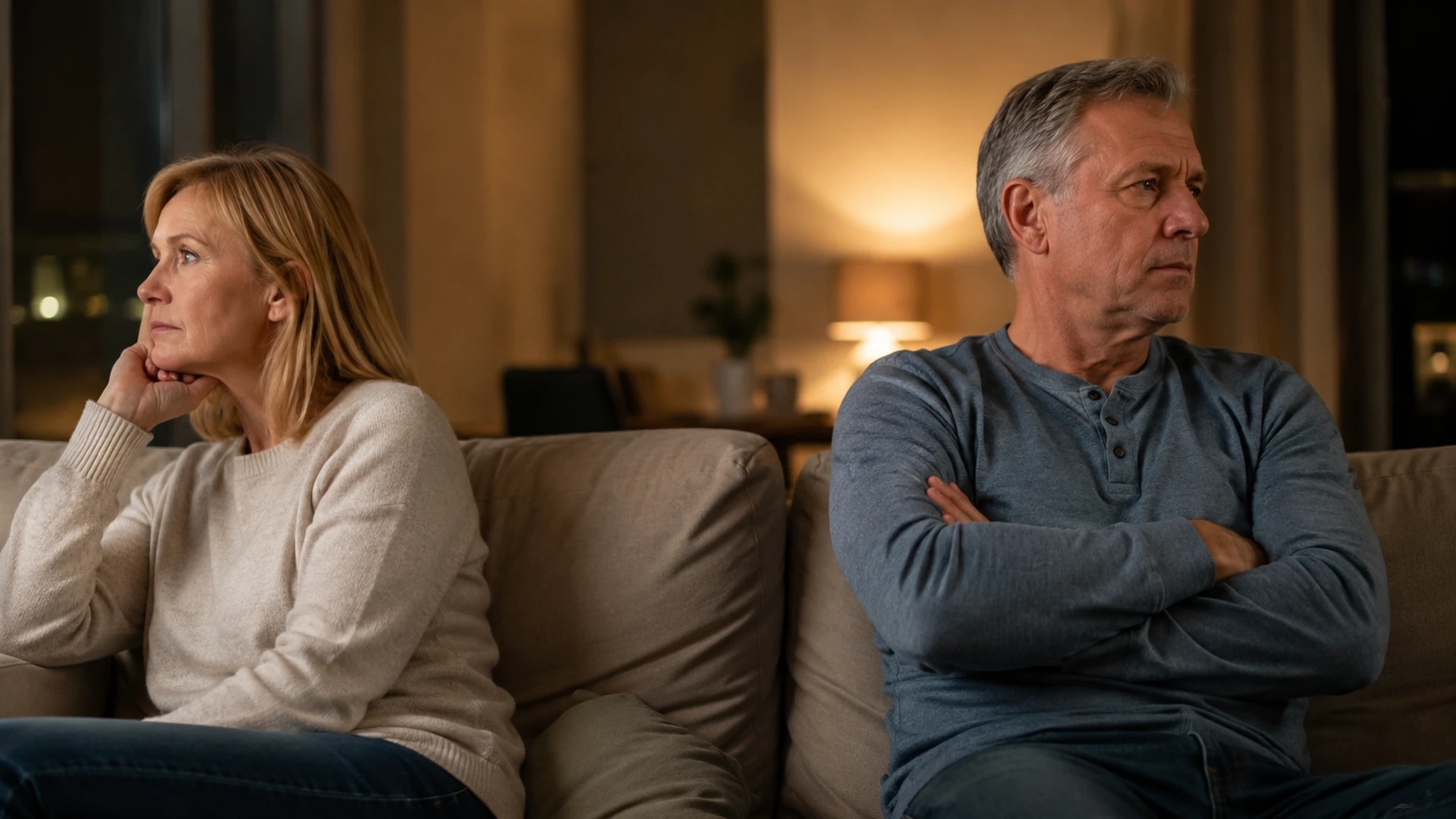
When your spouse says they don’t love you anymore, the marriage is not over, and the words almost never mean what they sound like. In 20 years of this work we have learned that “I don’t love you anymore” is usually the sound of someone who has stopped feeling loved, safe, or seen, and has gone numb to protect themselves. Love that has gone quiet under years of disconnection is not the same as love that is gone. The way back is the Inside-Out Method: you change who you are being first, and the feeling they have lost access to becomes available again.
You have probably been replaying the sentence on a loop. It was said in the kitchen, or the car, or the dark, and something in you went cold. It feels like a verdict. For someone who is used to being able to solve things, it also feels like the one problem that will not yield to effort.
It is not a verdict. It is a description of a feeling, and feelings are weather, not climate. When a person says they have no love left, what they are almost always reporting is that they cannot feel it right now. The capacity to feel it has been buried under accumulated hurt, unmet needs, and the slow erosion of feeling like a priority. The love did not vanish. Their access to it shut down. Those are different things, and the difference is everything.
Here is where most people go wrong. You hear the words and you panic, and panic makes you do the exact things that confirm their experience. You plead. You list everything you have done and provided. You demand they explain. You try to argue someone out of a feeling, which has never worked on a human being in the history of the world. Every one of those moves says the same thing: they still do not get it. And the gap widens.
The work is not to convince your spouse to love you. You cannot talk someone into a feeling. The work is to become someone whose presence makes that feeling possible again. That starts with an honest look at the dynamic, not to take all the blame, but to see your part clearly. What has it been like to be married to you? Where has your spouse felt unseen while you were busy being capable everywhere else? Not so you can punish yourself. So you can find the actual leverage, which is always in who you are being, never in what you are doing to them.
Christine sat in our yellow room thirteen years in, numb, with a bag packed. If you had asked her in that moment she could not have told you she loved me either. What turned it was not a speech. It was something shifting in me. I stopped trying to win her back and started becoming a man worth coming back to. The feeling she had lost access to returned, slowly, once the conditions for it returned. We have watched the same thing happen with thousands of couples since.
In practice the shift looks ordinary. You stop interrogating and start listening without defending. You let your spouse be where they are without making them wrong for it. You steady yourself instead of asking them to steady you. You become curious rather than desperate. When you stop operating from threat, your spouse no longer has to manage you, and the space that opens is where feeling can return. Around 85 to 90 percent of couples who do the work see the dynamic begin to move within 7 days.
You cannot make your spouse love you. You can change what they are loving or leaving from. The willingness to even tell you the truth is itself a door, and it is worth using while it is open.
If your spouse has said they don’t love you anymore, do not wait for the feeling to come back on its own. Book a free 15-minute call. Tell us what has happened. We will tell you plainly what we think is possible.
Related questions
Does “I don’t love you anymore” mean they have decided to leave? Rarely. It is far more often the sound of someone who has gone numb than someone who has chosen to go. The words signal pain and lost access to feeling, not always a decision.
Can love come back after a spouse says it is gone? Yes, when the conditions that buried it change. The feeling has not been destroyed so much as cut off. When the dynamic shifts and the marriage stops feeling unsafe, access to that feeling tends to return.
Should I move out if my spouse says this? Rarely as a first move. Distance can ease pressure, and leaving the home can also read as giving up. Talk it through with someone who understands the dynamic before making that call.
How fast can things change after they say it? Often within the first week of real change the temperature shifts, even before any conversation about staying. Deeper reconnection builds over the following weeks once the pattern itself has moved.