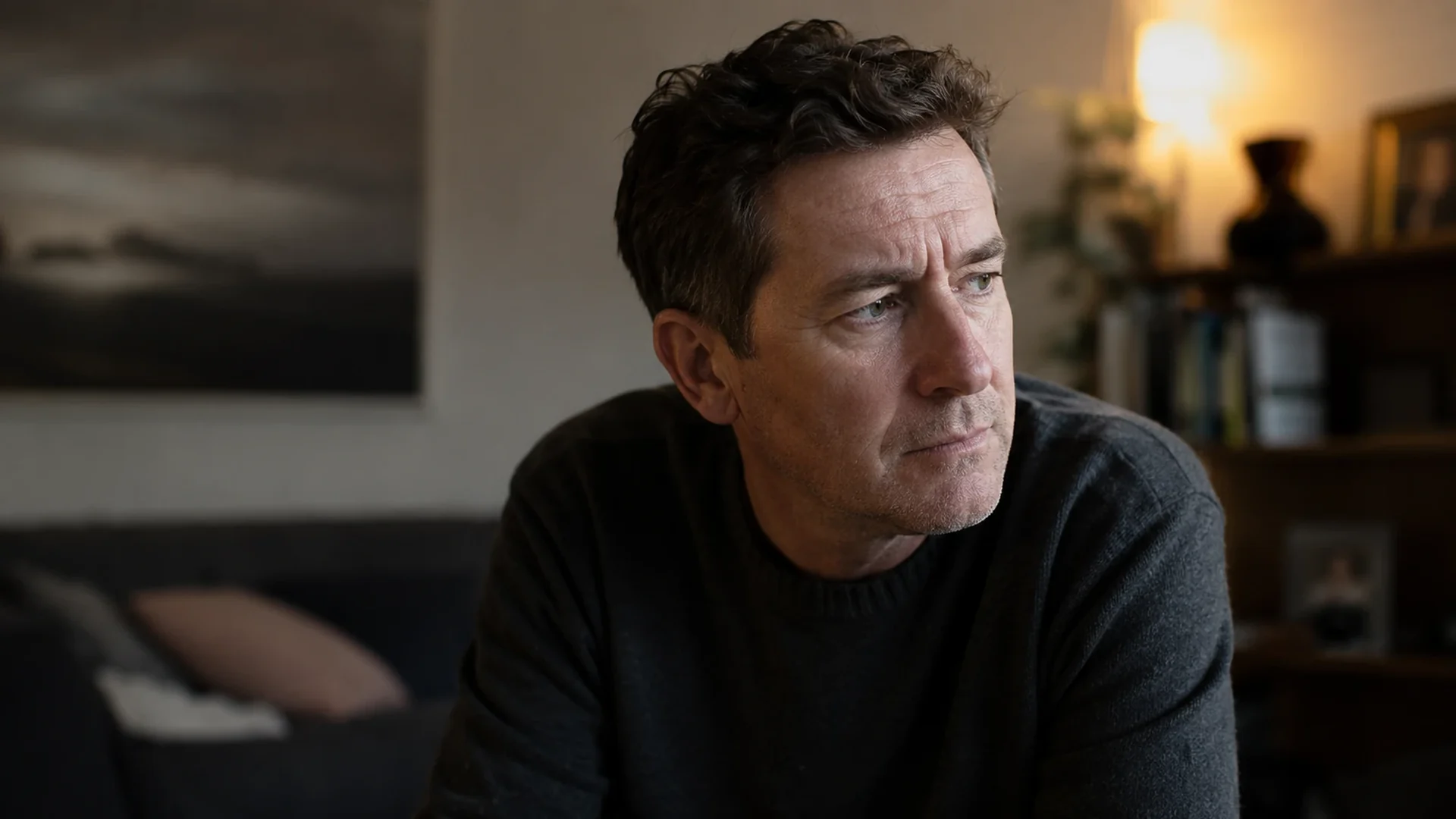
You feel like you wasted your life because you are judging the whole of it against a story of who you should have become, and that verdict is almost never accurate, it is the voice of an old code grading you, not the truth about your life. The feeling is real and it is heavy, and underneath it is usually not a wasted life but unlived parts of one, things you wanted, sides of yourself you set aside, that are now grieving for the attention they never got. That grief is worth listening to. The verdict it comes wrapped in is worth questioning. This is the Inside-Out Method at work, because the sense of waste is a judgment you are making, not a fact about your years.
The feeling tends to arrive as a sweeping conclusion. Not “I have some regrets,” but “I got it all wrong, I wasted it, it is too late.” It can land like a weight on the chest, a sense that the years are gone and you spent them on the wrong things or as the wrong person. It is one of the most painful feelings a man can carry, because it seems to pass judgment on the whole of his existence at once.
Here is what is usually true underneath. Almost no one actually wastes their life. What people feel as waste is the gap between the life they lived and a life they imagined, the road not taken, the self not expressed, the things deferred until “later” that later never came. That gap is real and it deserves grief. Yet it is not the same as waste. A life full of work, love, children, effort, and ordinary days is not wasted just because it was not the other life you also pictured. The verdict of waste is the harshest possible reading of a real grief.
And here is where the old code comes in. The voice that says “you wasted your life” is often the same internal judge that drove you all along, the one that said you were not enough, that you had to be more, that nothing you did would ever quite count. That judge does not soften with age. In midlife it simply turns its harshness on the whole of your life at once. The feeling of waste is frequently that voice grading you against an impossible standard, not an honest assessment of your years.
So the way through is twofold. First, listen to the genuine grief, the unlived parts, and start to live them now, because the time you have left is not nothing and the deferred self can still be expressed. Second, question the verdict, recognise the voice of the old judge for what it is and stop accepting its sweeping conclusion as truth. When you separate the real grief from the false verdict, the feeling changes. The grief can be honoured and acted on. The verdict can be set down, because it was never accurate.
I have felt that heavy conclusion, that maybe I got the whole thing wrong. What I learned is that the part of me delivering the verdict was the same old judge that had never thought anything I did was enough. The grief underneath it was real, and I could live the unlived parts. The verdict was false, and I could stop believing it. The life I had thought wasted was, looked at clearly, a life, with real regrets inside it and far more than waste.
You feel like you wasted your life because an old judge is grading the whole of it against an impossible standard. Honour the real grief underneath, live the unlived parts while you still can, and set the false verdict down. It was never the truth about your life.
This is a heavy feeling, and a persistent, crushing sense of a wasted life can also be depression, which is worth raising with a doctor. If you carry this and want to separate the real grief from the false verdict, book a free 15-minute call. Tell us where things are. We will be honest about what is possible.
Related questions
Why do I feel like I wasted my whole life? Because you are judging the whole of it against a story of who you should have become, often in the voice of an old internal judge. Underneath the verdict is usually real grief for unlived parts, which is different from actual waste.
Did I really waste my life? Almost certainly not. What feels like waste is usually the gap between the life you lived and a life you imagined. A life of work, love, and effort is not wasted just because it was not also the other life you pictured.
Whose voice is telling me I wasted my life? Often the same internal judge that drove you all along, the one that never thought you were enough. In midlife it turns its harshness on your whole life at once. The verdict is that voice, not an honest assessment.
What do I do with the feeling? Listen to the genuine grief for the unlived parts, and begin living them now while you still can. Then question and set down the sweeping verdict of waste, which was never accurate. If the feeling is crushing or persistent, it is also worth speaking with a professional.